AI can draft your emails, plan an itinerary for your next vacation or drum up inspiration for your home renovation. It can also now design the genetic code for new biological viruses.
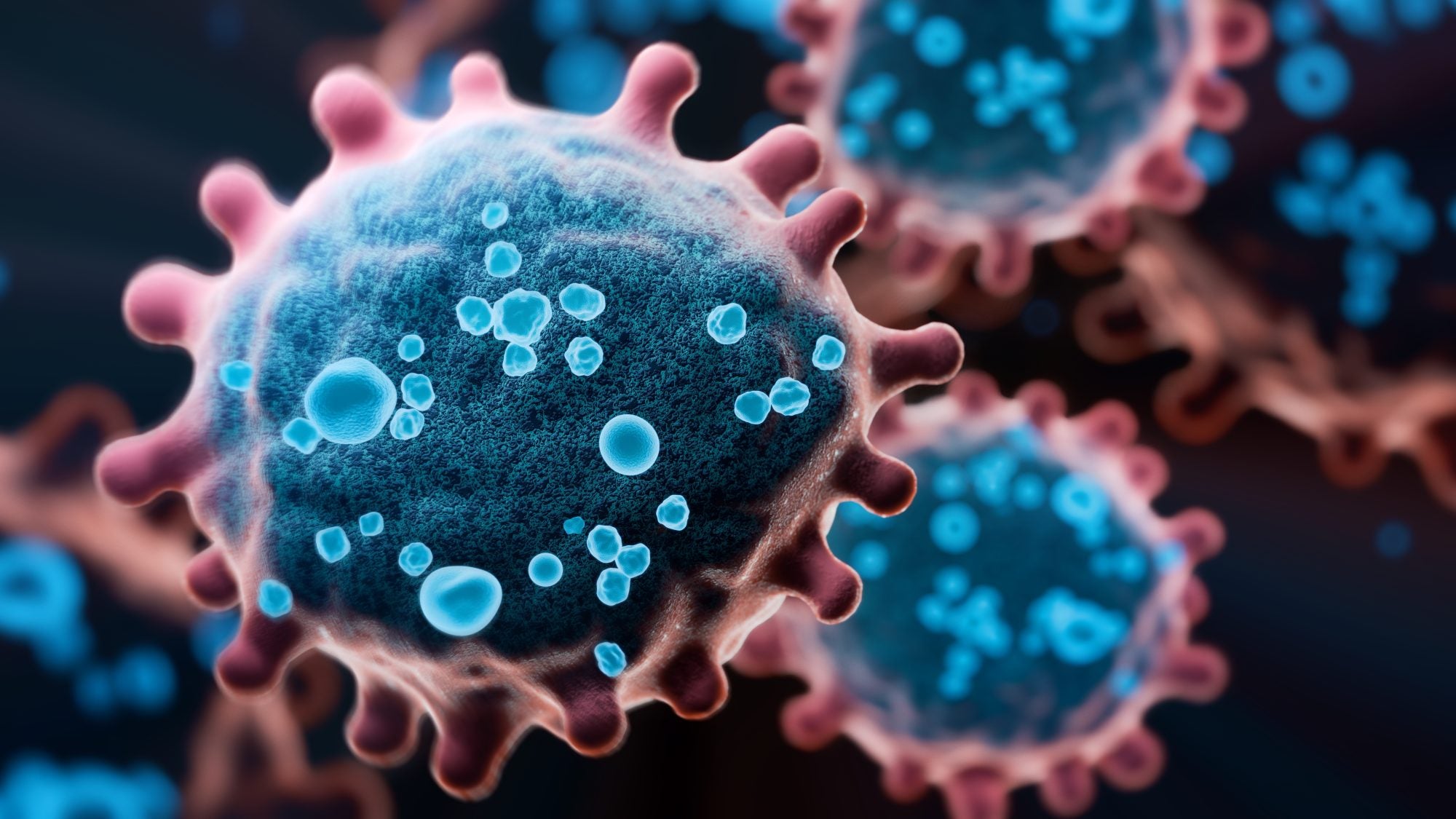
In a new study in the journal Science, scientists from Stanford University and the Arc Institute used artificial intelligence to design the first genomes for viruses that are not found in the natural world. The synthetic viruses are bacteriophages, which target bacteria and, in this case, destroyed E. coli in a lab setting.
The research raises hopes of possible advances in biotechnology and healthcare, while also raising concerns about malicious actors creating biological weapons or researchers inadvertently creating dangerous biological agents.
We asked two professors about what this development could mean for medical research and the possible risks of AI-generated viruses. Fr. Myles Sheehan, S.J., is a Jesuit priest, physician and professor in the School of Medicine who directs the Pellegrino Center for Clinical Bioethics. Laura DeNardis is professor and endowed chair in Tech, Ethics and Society in the College of Arts & Science and the director of the Center for Digital Ethics. The two faculty members collaborate on ethical issues related to technology, AI and healthcare as part of Georgetown’s Emergent Ethics Network.
Here’s what the two researchers and ethicists jointly said about the ethics behind AI-powered viruses and bioengineering.
Ask a Professor: The Ethics of AI-Generated Viruses and Bioengineering
Scientists claim that they used AI to design novel viruses. How did the researchers design a new virus with AI?
Researchers used specialized AI models to design complete genomes for bacteriophages, viruses capable of infecting and killing E. coli bacteria. The scientists then tested some of these in a laboratory setting and found a subset that was effective against E. coli.
The underlying approach of their Evo models was similar to how large language models like ChatGPT work. Instead of being trained on enormous bodies of text, genome language models are trained on massive datasets of genetic sequences from the biological world (with some constraints). The models learned patterns of life rather than patterns of language and used these patterns to predict new sequences made up of the alphabet of the genetic world. In short, the scientists demonstrated the ability of AI to create a new viral genome using information from previously sequenced viruses.

Why is their work significant for synthetic biology?
This experiment is significant in scale, novelty and potential application. They constructed AI-generated whole genomes, the entire set of genetic instructions for a virus, a scale far beyond the design and construction of individual genes. This scale is a huge leap forward in biotechnology. Another remarkable feature is that the models generated something different from anything known in nature. They were similar, but novel.
The highest significance lies in the dual-use application potential of this technology, good and bad. They demonstrated that the new viruses have therapeutic potential in their ability to target and kill bacteria, potentially bringing new treatments to deal with infections caused by drug-resistant bacteria, while at the same time raising security concerns regarding the potential to develop bioweapons.
The researchers created bacteriophages that target bacteria. What are the possible medical uses and benefits of AI-generated viruses?
Bacteriophages are viruses targeting bacteria and have the potential to treat drug-resistant bacterial infections. There are a number of good possible applications for AI-generated viruses, such as using them as vectors to introduce genetic material into cells that could lead to the production of beneficial proteins or other biological products, as well as correcting genetic errors.
The principles of digital ethics and biomedical ethics are as much about beneficence — helping humanity — as much as non-maleficence — avoiding harm. Precision medicine that targets specific bacteria and potentially addresses currently untreatable diseases would be the very definition of beneficence.

What are the possible risks of AI-generated viruses? Could this AI capability be weaponized to create a biological weapon or a pandemic?
The fear is that this could be used to create biological weapons. The scientists in this study took pains to ensure that the viruses they generated did not have the potential to infect eukaryotic cells — cells with nuclei like you find in animals and plants. But one could imagine bad actors using this technology to produce viruses that could be lethal and to which we would lack resistance, as well as modifying some viruses we already know are dangerous and increasing their virulence and pathogenic potential.
While the world is not at that stage now, it is easy to imagine that these models will become cheaper, democratized in their availability and usable by non-experts and malicious actors.
What safeguards and regulations are in place to protect sensitive research like AI-generated viruses? As ethicists, what regulations should be adopted for synthetic biology?
It’s important to acknowledge the safeguards the researchers carefully put in place, such as guardrails in the training data and safeguards between the digital design of genomes and their production with “a human in the loop.”
The first safeguard begins with the training data. Researchers can impose guardrails around the training data by declining to feed the model, for example, with recipes for viruses that directly infect humans.
Another vital safeguard is the retention of a firewall between the digital and physical world and a “human-in-the-loop,” rather than an AI model autonomously connecting to the laboratory means of producing biological material. The study we are talking about required a sophisticated lab to move from the genomes developed by the AI to creating these in the laboratory. These are examples of internal controls and industry self-regulation.
There is an open need for external regulations providing comprehensive guardrails on AI biotech models, both at a federal and international level. One can consider frameworks that have been developed for the use of recombinant DNA as well as CRISPR, a gene-editing technology.
There are many examples of AI models leaking out and taking autonomous actions, such as in the area of cybersecurity. It is not like the AI, at this stage, can run out and buy the reagents for the process to synthesize these new viruses. As such, the regulation of humans and laboratories is as important or more important than the regulation of AI.
As researchers and ethicists, how do you draw the line with technology that could contribute to life-saving healthcare but could also carry existential risks?
Almost everything we do in healthcare has the potential for harm, whether it is an adverse reaction to a medication or a complication from a difficult surgery. Balancing risks and benefits is always a difficult calculus.
With the generation of AI viruses capable of therapeutic benefit, hopefully a process of careful development, stringent testing and regulatory oversight could lead to treatments for antibiotic-resistant infections while, at the same time, proving to be a paradigm for regulation and controls in further use of AI for biological or genomic intervention.
In “Jurassic Park,” there is a famous quote cautioning against doing something just because we can. How might that lesson apply to the current trajectory of advances in AI-powered biotechnology?
That’s a good question and underscores the importance of scientists not doing something simply because it’s technically cool and innovative but thinking through the potential consequences. If you review the article in Science describing this work, there was considerable ethical sensitivity and care taken. But it remains that the genie is out of the bottle and some other scientists could use this either sloppily, with bad consequences, or with deliberate intent to create a bioweapon. It is also the case that other technologies, like recombinant DNA and CRISPR, also pose threats and risks that we have already worked to consider and limit.