Category: Discovery & Impact
Title: More Young People Are Getting Colon Cancer Than Ever. This Doctor Is Accelerating Clinical Trials to Find New Treatments
Date Published: September 21, 2026
When Dr. John Marshall was a young oncologist in the 1990s, none of his colorectal cancer patients were under the age of 50. Today, nearly half of his patients are.
It’s no coincidence.
Colorectal cancer is now the deadliest cancer for people under 50. The rate at which people under 65 are diagnosed with the disease rises nearly 3% every year.
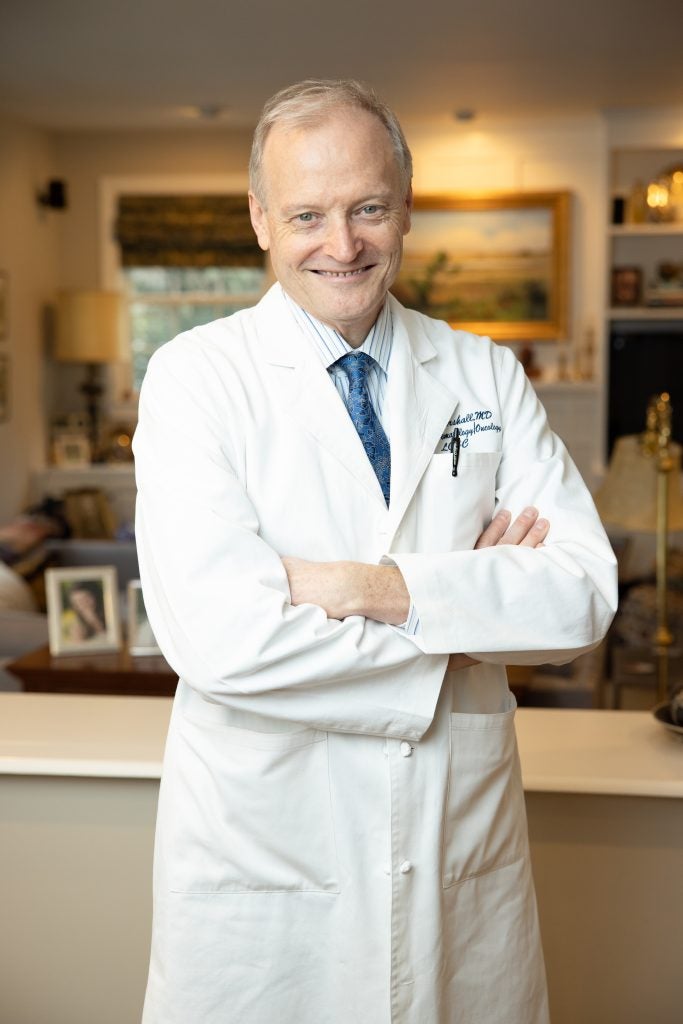
The worrying trend has fueled a sense of urgency for Marshall, a professor of medicine and oncology at the Georgetown University School of Medicine and the director of the Ruesch Center for the Cure of Gastrointestinal Cancers at Georgetown’s Lombardi Comprehensive Cancer Center. Marshall has devoted his career to developing new precision treatments to better understand one of the fastest-growing cancers in the U.S.
Today, Marshall leads KLEOS, a new collaboration of researchers, patient advocacy groups and pharmaceutical companies to accelerate the pace of research to find new treatments for colorectal cancer.
“Given the rate at which it’s growing and the clear lack of understanding as to why, there’s no stronger signal that something is going on in our environment, in our world, than young-onset colon cancer,” Marshall said.
The Challenge of Treating Colorectal Cancer
Over the last few decades, treatments for cancers like lymphoma, breast, lung and prostate cancers have improved dramatically to boost survival rates for patients. However, according to Marshall, the fight against colorectal cancer has not seen the same success.
“We have made some progress, but not enough,” Marshall said.
Over the last couple of decades, researchers have begun to accept that colorectal cancer is not just one disease, Marshall said. That realization has since paved the way for more targeted research and therapies.
“Our old way was just looking at the cells, but when you look at the genes, it’s a completely different disease, so now we know what makes these things tick,” he said.
Scientists have known that genetics can influence a person’s risk of developing colorectal cancer. But today, researchers like Marshall think that the gut’s microbiome, or the bacteria living inside the human body, plays a critical role in the disease’s development.
“We think there’s something we’ve done to our environment, to our food, something that’s created a difference inside of us that’s causing health repercussions, and colon cancer is one of them,” he said.
While researchers continue to investigate the microbiome, Marshall believes that people today aren’t exposed to the variety of bacteria that previous generations were used to, which may have contributed to adverse health effects like rising colorectal cancer rates today.
The solution may be to eat more dirt, he jokes.
“When I was a kid, we ate dirt because we didn’t wash our hands. We were free-range kids back then. Then kids got to be much more tightly controlled,” he said.
More hand-washing. More cleaning products. More antibiotics. More processed and homogenous foods.
Marshall doesn’t necessarily believe we should stop washing our hands or using antibiotics, but he does believe they might influence the development of colorectal cancer.
“We have created a culture of sterility that has not necessarily helped us grow the best microbiome,” he said.
Accelerating Colon Cancer Research and Clinical Trials
In the research world, a single clinical trial for a new medicine can often take over a decade to be translated from a laboratory finding through three safety and efficacy clinical trial phases to FDA approval. A significant chunk of time can be lost due to slow-moving regulatory approvals and paperwork.
It’s time that many colorectal cancer patients don’t have.
The sluggish process inspired Marshall to found KLEOS, a clinical trial platform that streamlines the process to get new treatments tested and approved at a fraction of the cost.
KLEOS aims to cut the time it takes for a new treatment to go through the clinical trial process by establishing a single protocol to evaluate multiple novel therapies simultaneously. In collaboration with the Colorectal Cancer Alliance (CCA) and the Global Coalition for Adaptive Research, the platform removes administrative hurdles for new therapies to be tested in clinical trials.
The platform brings together academia, philanthropy, patient advocacy groups and the pharmaceutical industry to accelerate drug development. As the principal investigator, Marshall connects these stakeholders and leads the design and implementation of new colorectal cancer clinical trials.
“We’re tired of it taking so long. We’re impatient,” said Marshall, who is also the chief medical consultant for CCA. “There is clearly a dramatic need and a large patient base, and this young-onset colorectal cancer is driving it even more. We have to do this now.”
Caring for Young-Onset Colorectal Cancer Patients
Young-onset colorectal cancer can look completely different from other forms of colorectal cancer. The unique challenges younger cancer patients face require different forms of treatment, Marshall said.
While many health experts believe that the rising rates of colon cancer can be attributed to unhealthy diets, ultra-processed foods and sedentary lifestyles, Marshall believes it’s more complicated than that. Many of Marshall’s younger colorectal cancer patients run marathons, eat clean foods and adopt healthy lifestyles.
Even where the cancer is located is often different in younger patients. While older patients can develop cancer anywhere along the colon, over 90% of younger patients develop the disease closer to the rectum on the left side of the body, Marshall said.
“It’s a new disease. It appeared in the last 30 years,” Marshall said. “I’ve been watching it happen. I’ve been watching a new disease emerge.”
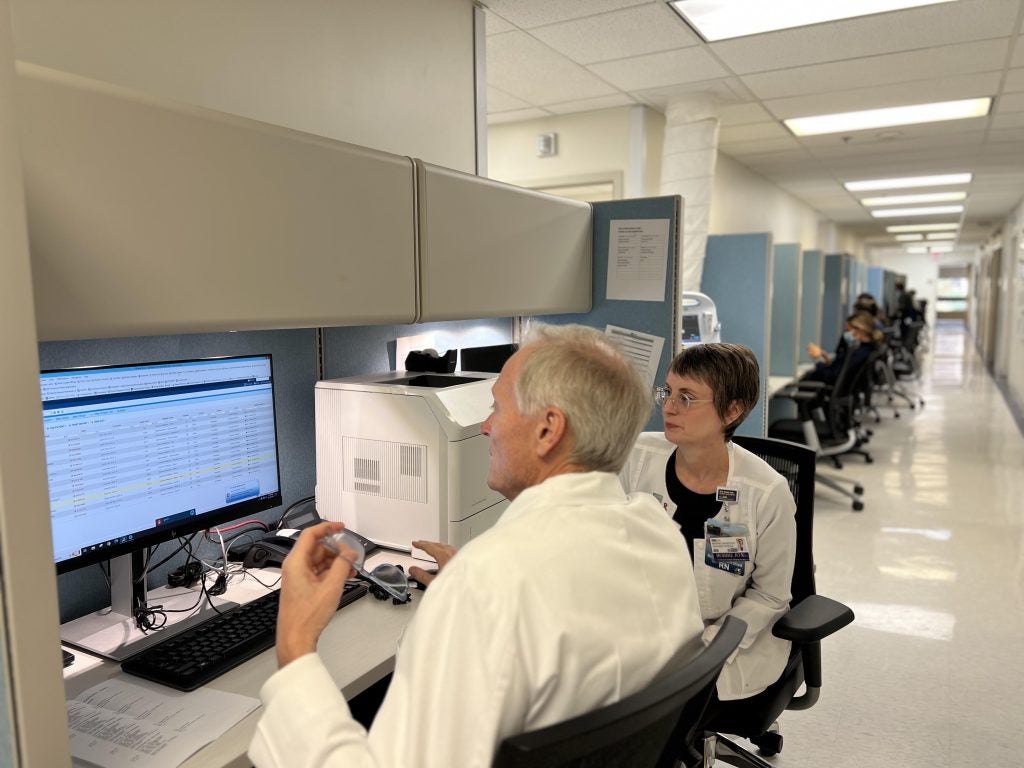
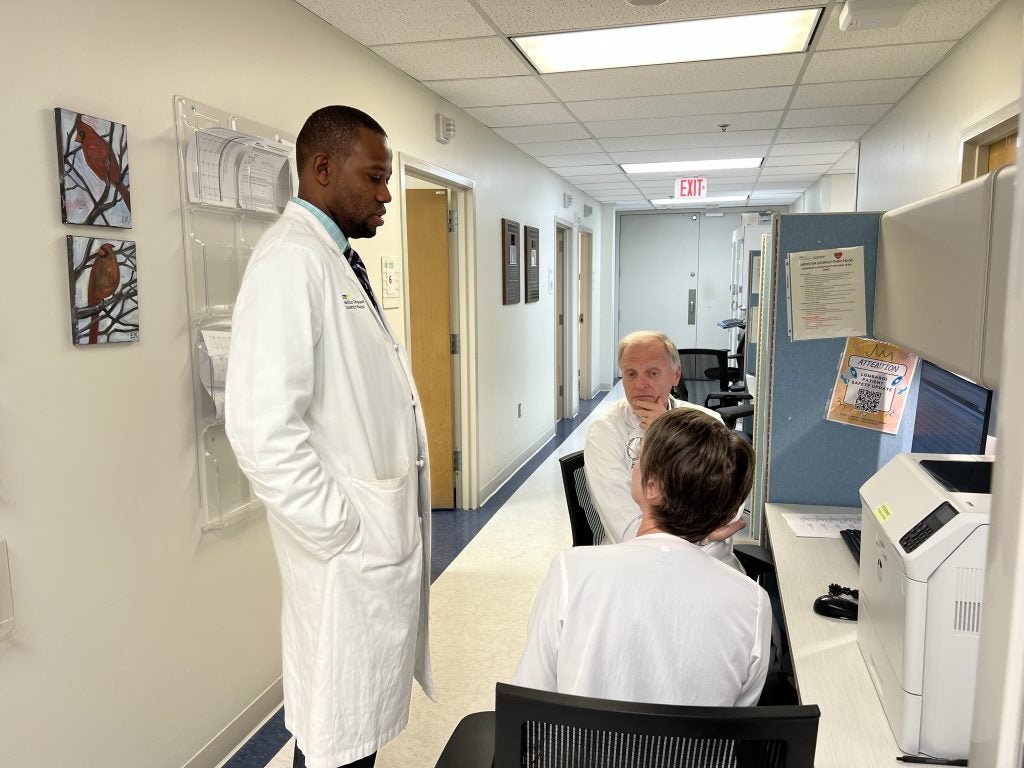
For Marshall, how we treat younger colorectal cancer patients ties directly back to Georgetown’s Jesuit ethos of cura personalis, or care for the whole person. The considerations for treating a middle-aged adult are vastly different from treating a senior cancer patient. Healthcare providers need to consider those differences when weighing treatment options, he said.
“How do you take care of somebody who’s got such a bad cancer in the prime of life, in the middle of work, in the middle of raising kids,” he said. “In any complex medical world, you can’t just understand the X-ray and the blood tests and recommend a treatment. You have to understand what the patient brings into the room with you.”
As Marshall has treated more and more younger patients, he’s also worked to develop precision medicine for colorectal cancer. These treatments target specific genes in individual patients, which can be more effective and less destructive than chemotherapy.
“It’s not treating all the cancers the same. It’s understanding what’s broken in an individual tumor and trying to restore that,” he said.
When Marshall began his medical career, there were virtually no treatments for gastrointestinal cancers, he said. Today, there are many treatment options for colon cancer patients, but the need for new therapies is still significant. While seeing young cancer patients can be discouraging, Marshall stays motivated knowing he’s impacting people’s lives in his research and everyday encounters.
“To look across the table at a 40-year-old who’s going to die of colon cancer is not an easy job,” he said. “What brings me joy is helping other people. Some days I feel like I’ve had a major impact on an individual’s life or even on the field of healthcare and medicine. And some days it’s just guiding somebody to find the right clinic. But when I’ve helped somebody, it brings me joy, so that’s my motivation.”